
Bauhaus Modern
Innovative homes that blend clean lines, functionality, and sustainability.
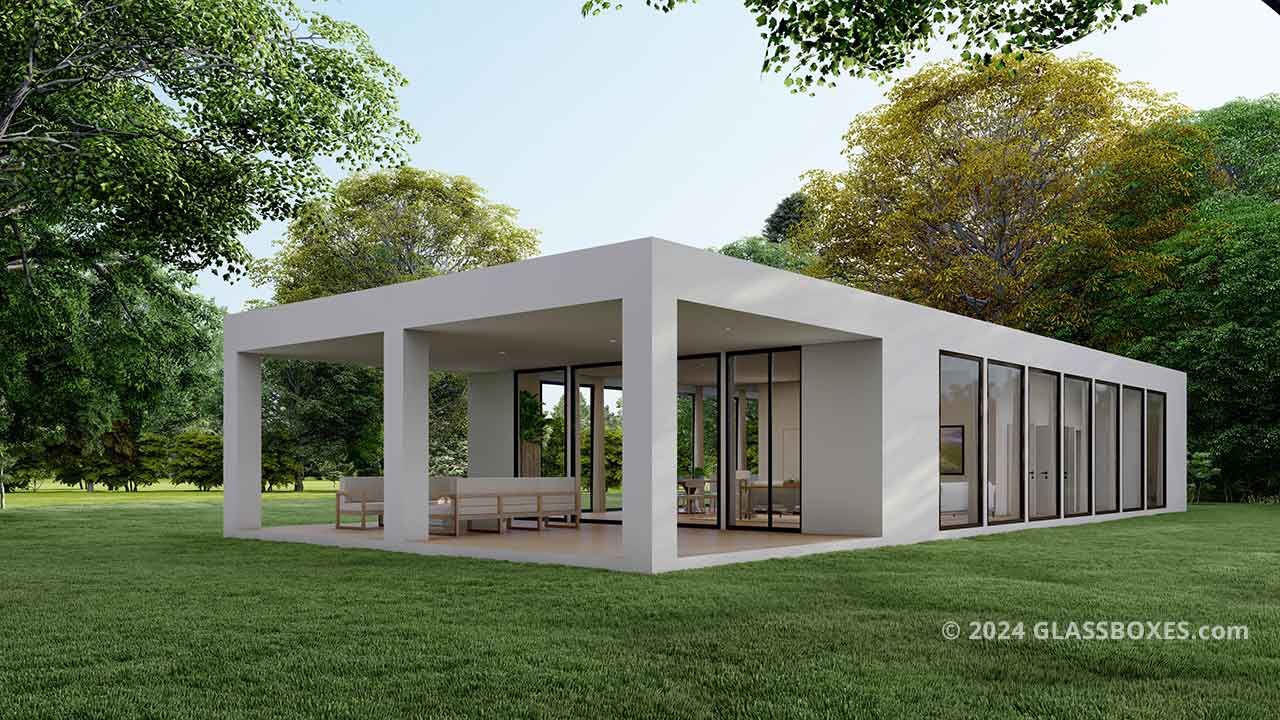
Bauhaus Modern
2 Bedroom, 2.5 Bathroom
32′ x 76′ / 2,432 square feet (with patio)
Starting at $395,400, plus shipping.
Inspired by an icon. Built for the way you live now.
There’s a reason Mies van der Rohe’s Farnsworth House has captivated architects, artists, and dreamers for more than seventy years. Its quiet geometry. Its dialogue with the landscape. Its idea that a home could be a frame for nature itself. The Bauhaus Modern carries that lineage forward—reimagined for modern life, modern families, and modern timelines.
At 2,432 square feet (32′ × 76′, patio included), this 2-bedroom, 2.5-bathroom home opens with a grand entry that flows into a soaring Great Room with views in all four directions. Ten-foot windows wrap all four sides of the home, dissolving the line between inside and out. Light moves through the space all day. The covered patio extends your living outward, offering an elegant, sheltered place to gather, dine, or simply sit with your morning coffee and watch the world wake up.
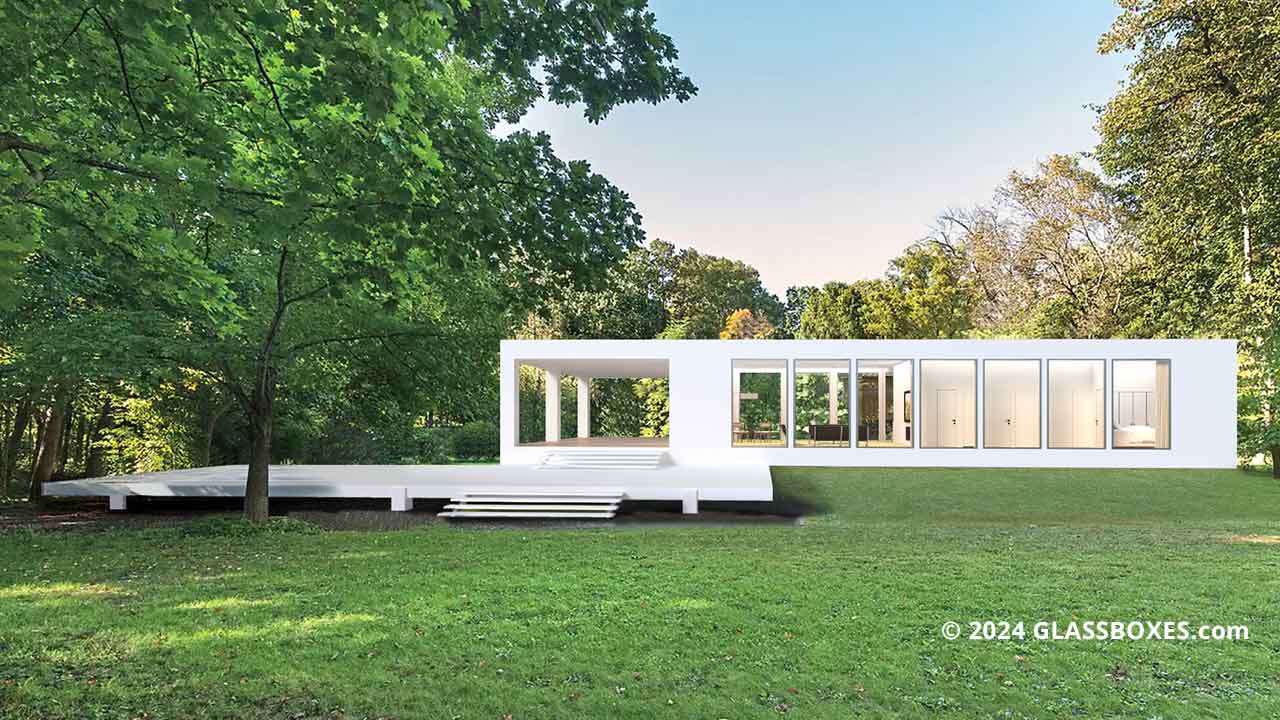
Bauhaus Modern with Farnsworth House style deck
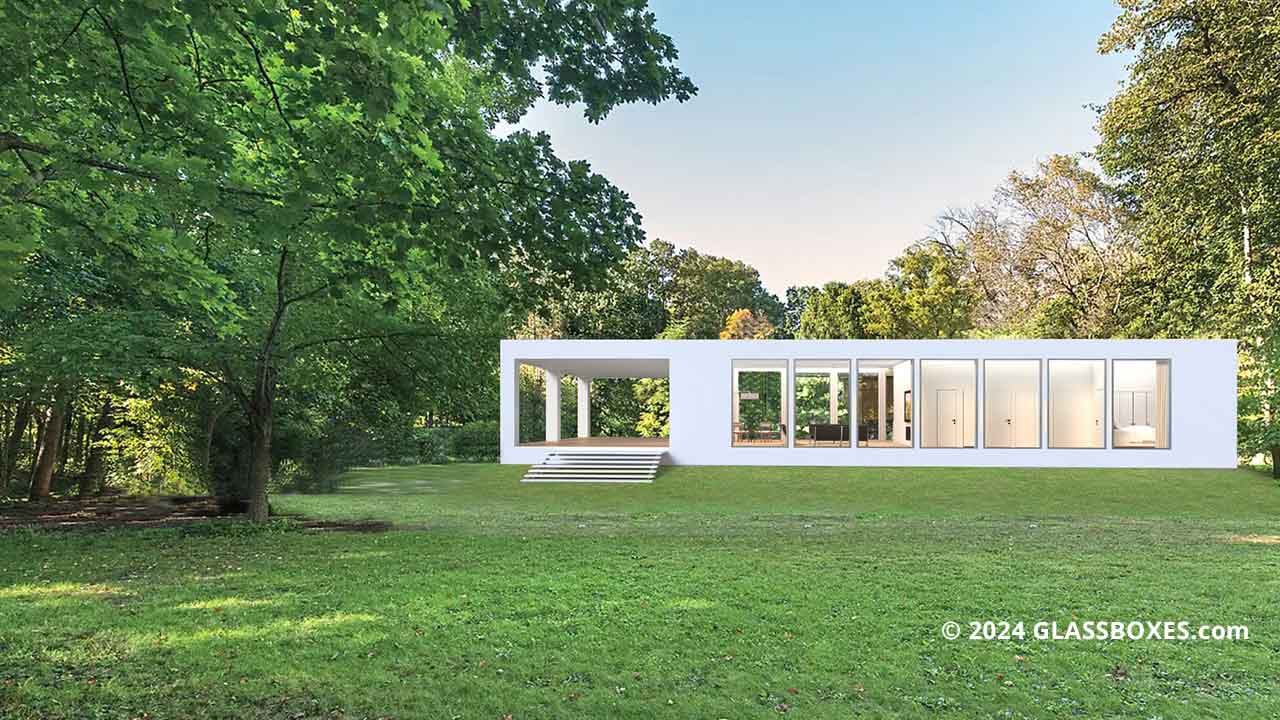
Bauhaus Modern with stairs

Bauhaus Modern floorplan
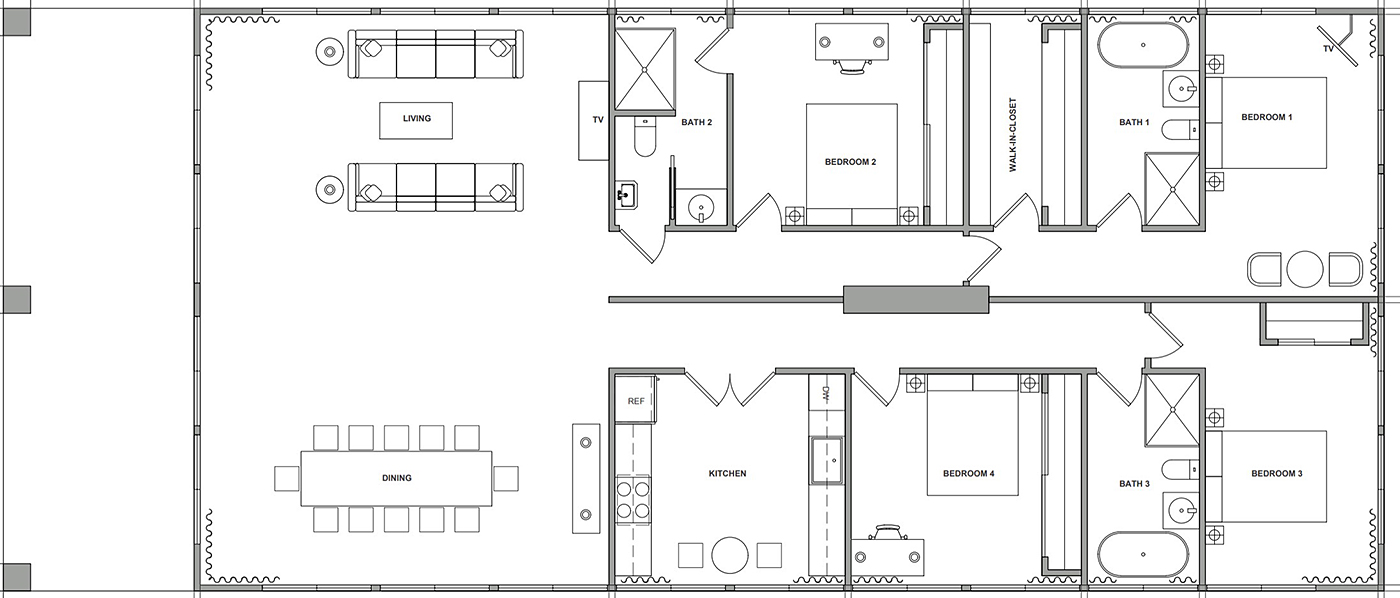
Bauhaus Modern Plan B – 4 bedroom/3 Bath
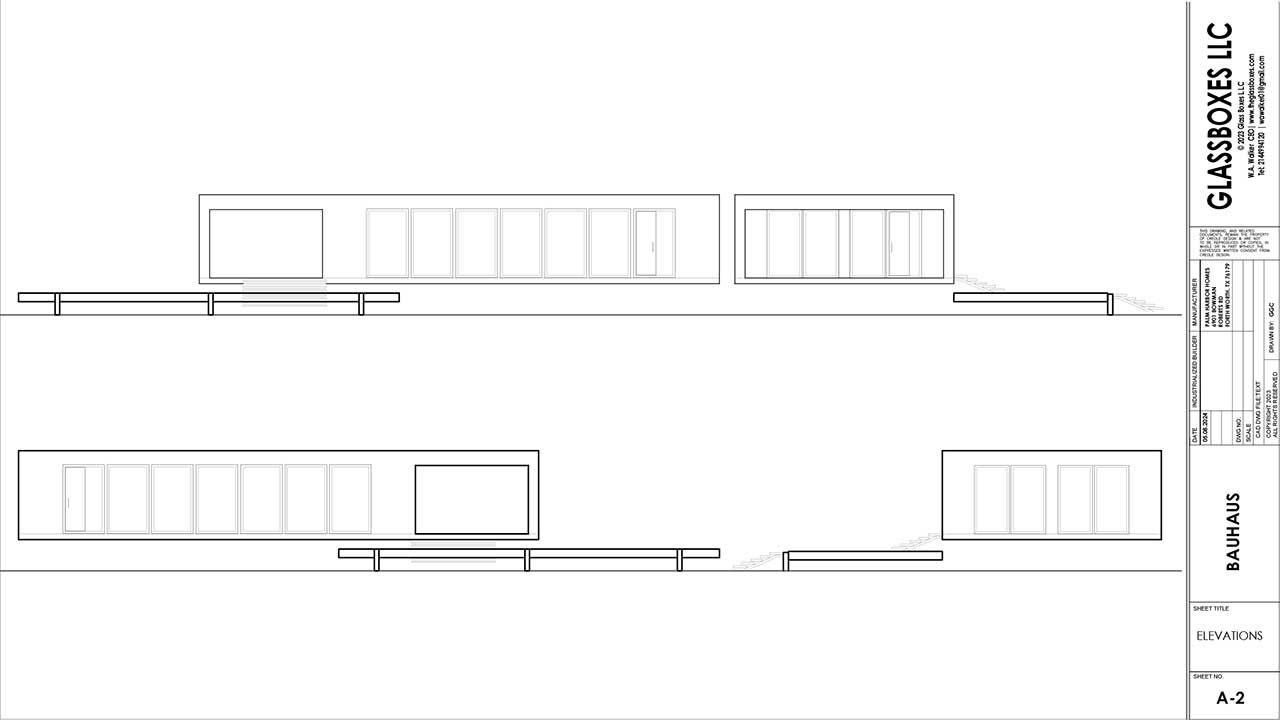
Bauhaus Modern elevations
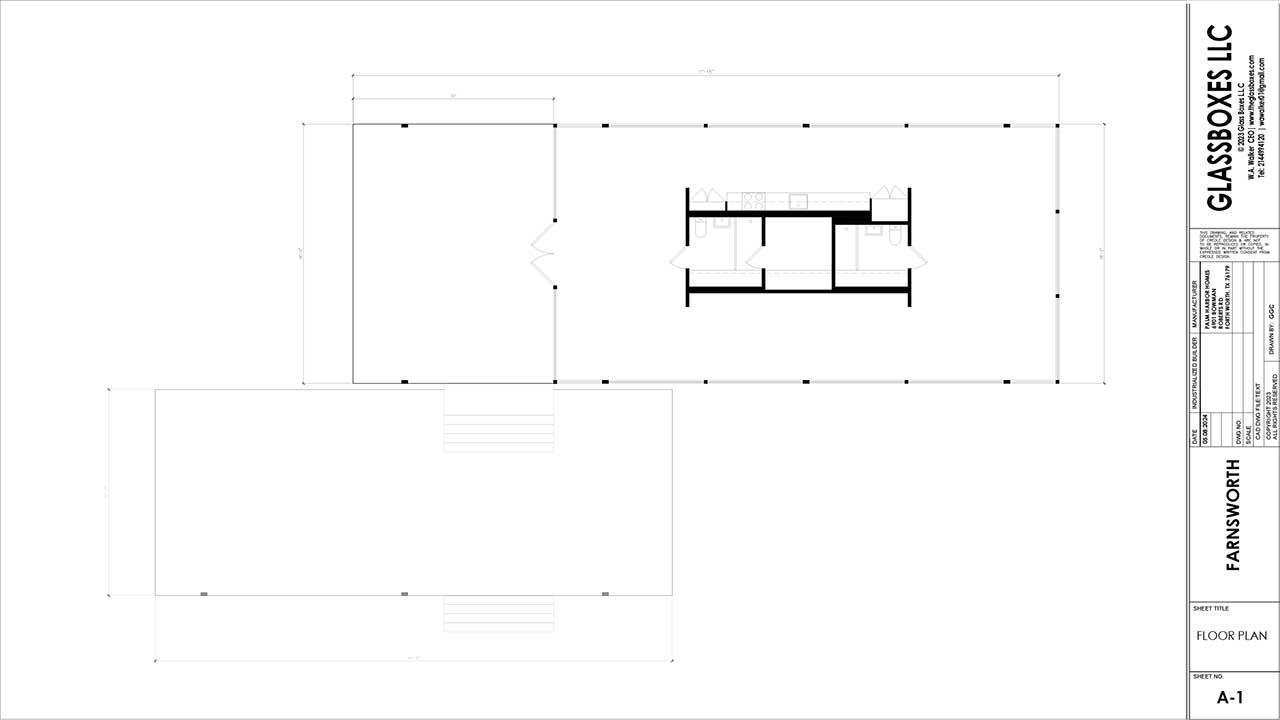
Farnsworth floorplan

Farnsworth elevations
This is completely site-built quality with additional insulation.
If your property’s building department produces a verifiable letter confirming ‘reciprocal acceptance’ or will accept the Texas Modular Certified Building Code, updated to IRC 2021, then we can review the building zone and possibly ship you the home. This must be a verifiable letter and does not guarantee purchase.
The Bauhaus Origins of Our Bauhaus Modern Home
Ludwig Mies van der Rohe, the Bauhaus, and the making of the modern steel-and-glass home
Our Bauhaus Modern home descends from one of the most consequential design movements of the twentieth century, and from the architect who carried it to its purest expression. Ludwig Mies van der Rohe (1886–1969) was born in Aachen, Germany, the son of a stonemason, and trained not at a university but through apprenticeship — first with the designer Bruno Paul, then in the Berlin office of Peter Behrens, alongside Walter Gropius and Le Corbusier.1 By the late 1920s he had become one of Germany’s leading modernists, distilling his philosophy into two phrases that still define restraint in design: “less is more” and “God is in the details.”2 His German Pavilion for the 1929 Barcelona International Exposition and the Villa Tugendhat, completed in 1930, remain touchstones of the International Style.3
In 1930 Mies became the third and final director of the Bauhaus, the revolutionary German school that fused art, craft, and industry. He led it through its move from Dessau to Berlin and its closure in 1933 under National Socialist pressure, then emigrated to the United States in 1938, where he directed the architecture school at the Armour Institute — today the Illinois Institute of Technology — and went on to build the Farnsworth House and the Seagram Building.4,5 Our Bauhaus Modern home carries that lineage forward: clean geometry, honest steel-and-glass structure, and interiors shaped by the conviction that less, done exactly right, is more.
1. Ludwig Mies van der Rohe — Encyclopaedia Britannica and Knoll: Ludwig Mies van der Rohe: born 1886 in Aachen; stonemason’s son; apprenticed under Bruno Paul and Peter Behrens.
2. Encyclopaedia Britannica: the aphorisms “less is more” and “God is in the details.”
3. Bauhaus Kooperation: Ludwig Mies van der Rohe: Barcelona Pavilion (1929) and Villa Tugendhat (completed 1930, a UNESCO World Heritage Site).
4. Bauhaus Kooperation (official Bauhaus archive): third and last Bauhaus director from 1930; move to Berlin; closure in 1933.
5. Knoll and ArchEyes: Mies van der Rohe biography: emigrated to the U.S. in 1938; director of architecture at the Armour Institute (later IIT); Farnsworth House and Seagram Building.
Are you interested? Get on the list.